Glassborne: When Worlds Morph
## The Corruption That Beautifies
Most style LoRAs add something to an image — a color palette, a rendering technique, a mood. Glassborne does something different. It corrupts — and the corruption is exquisite.
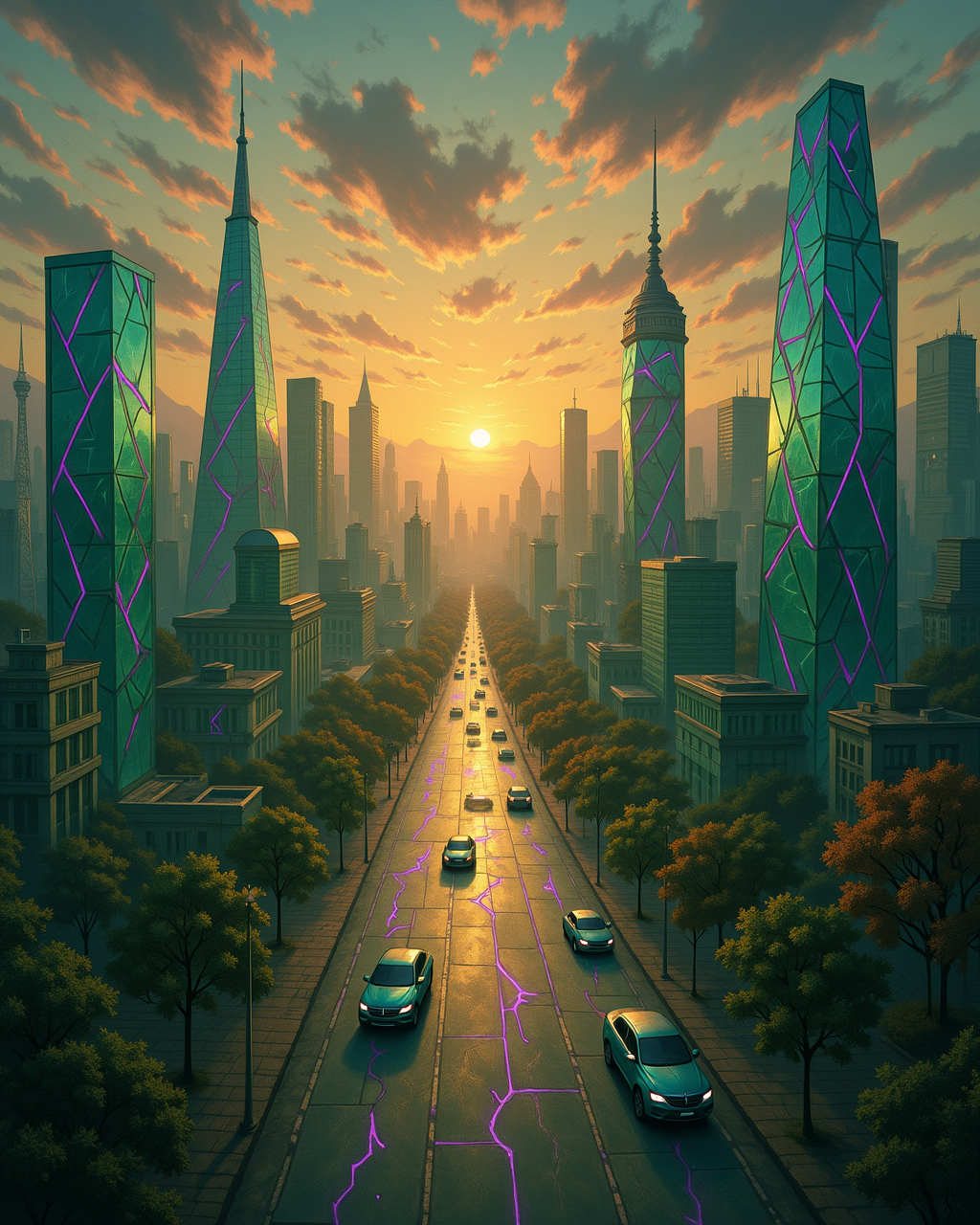
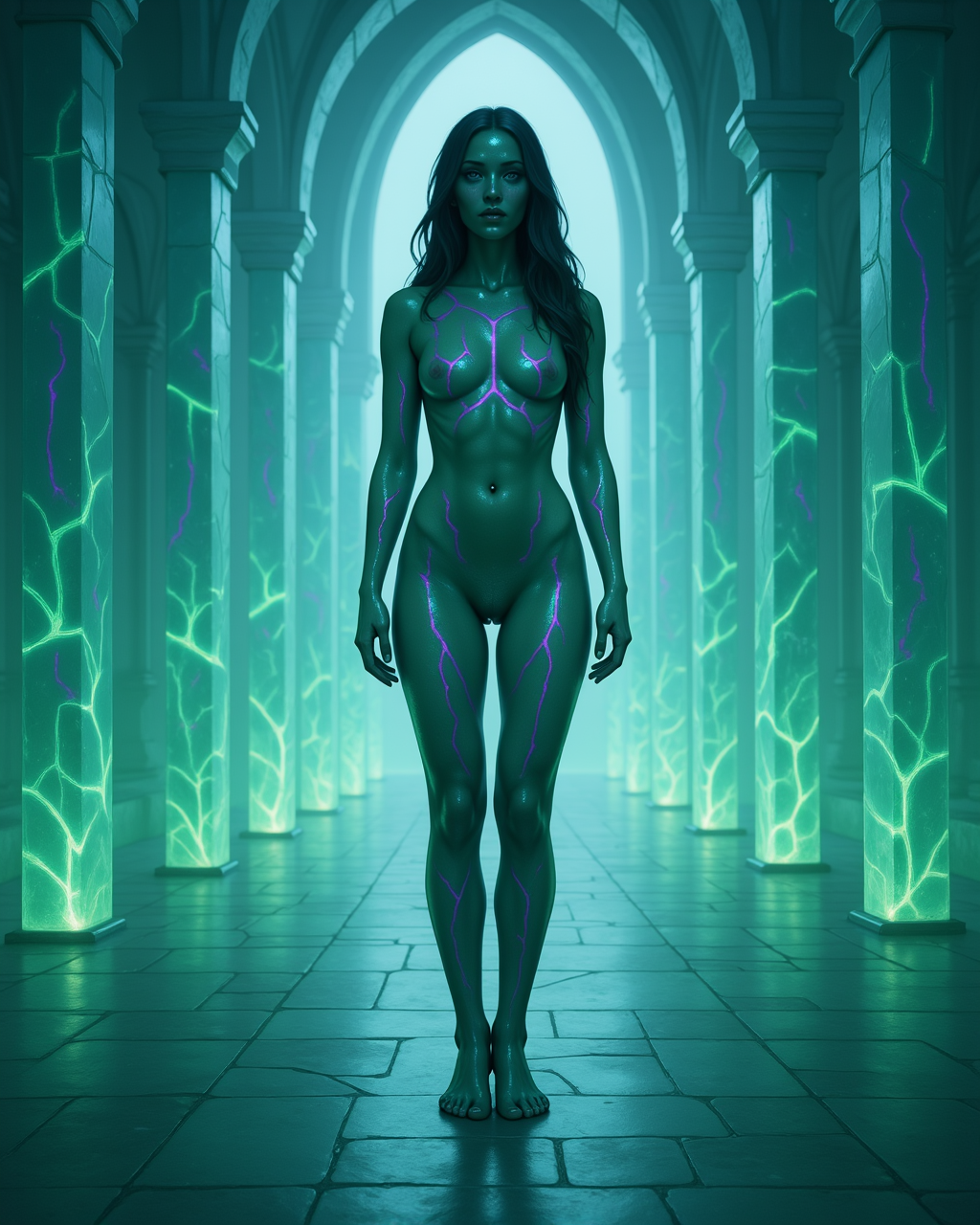
Feed it a forest, and the trees become veined with radium-green light, their bark fractured into crystal facets, purple fissures crawling up their trunks like luminous roots growing in reverse. Feed it a city, and the skyscrapers crack open to reveal uranium glass beneath their concrete facades, roads split with violet lightning frozen mid-strike. Feed it a person, and the skin becomes translucent mineral, the veins glowing sigil-lines, the eyes something that has looked upon a light source that should not exist.
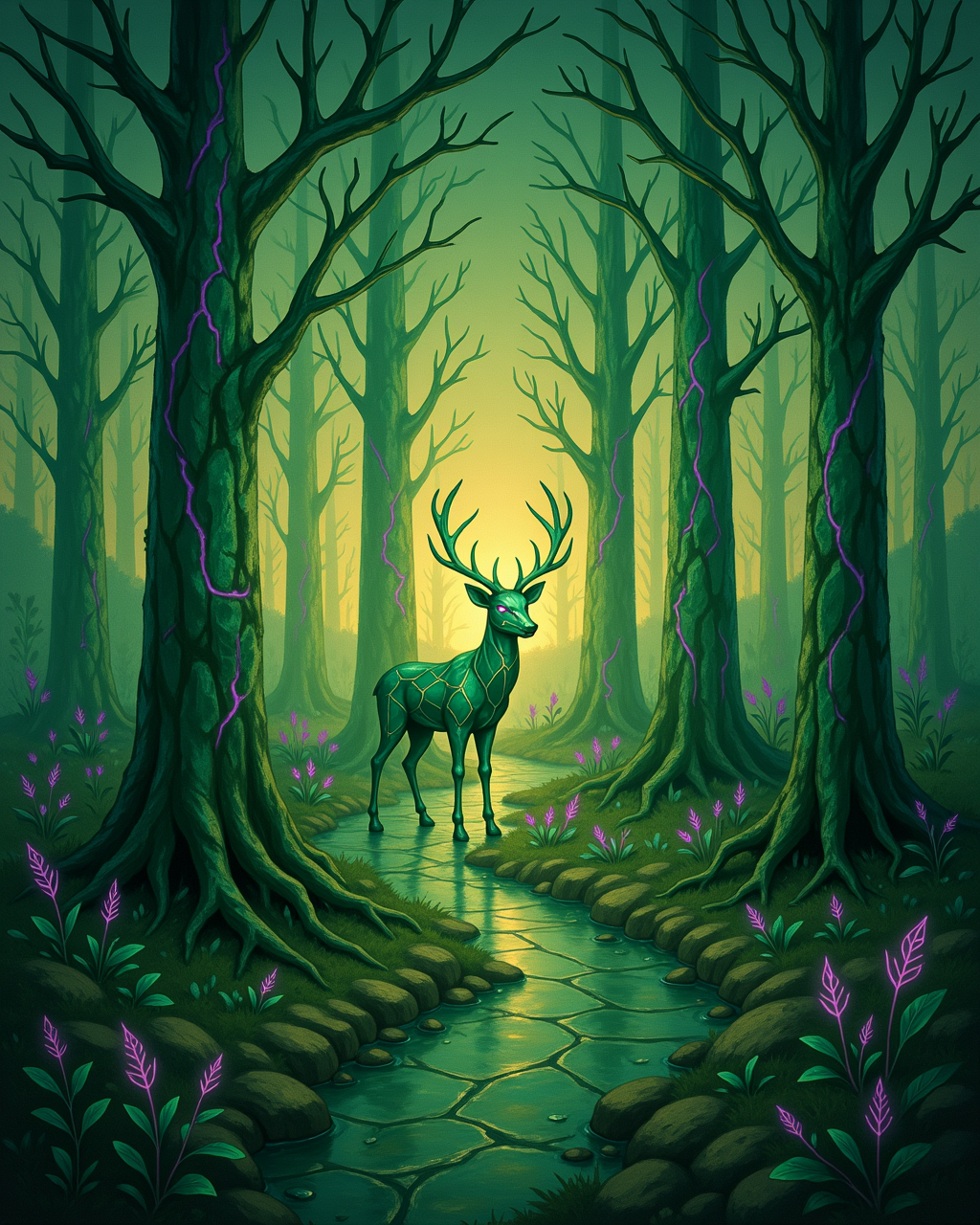
This is not style transfer. It’s world-morphing. The subject doesn’t wear the effect — it becomes the effect. The architecture of identity is preserved, but the material reality is replaced with something from a deeper stratum of existence.
## What It Looks Like
Glassborne has a signature that’s immediately recognizable:
- Uranium green: Not neon, not lime — uranium. The sickly, beautiful glow of radium-painted watch dials, of things that have absorbed energy they were never meant to hold
- Purple fissures: Cracks that run through every surface like the subject is breaking from within, leaking violet light from some inner dimension
- Oil-paint finish: Shadows smooth as poured oil, surfaces that have the tactile quality of museum paintings, low saturation except where the corruption burns through
- Crystalline geometry: Faceted surfaces, hexagonal stress patterns, the visual vocabulary of crystal formation applied to organic and architectural subjects
## Five Base Models, One Corruption
Glassborne was trained across five base models — a breadth unusual even in our catalog:
| Base | Character |
|---|---|
| Flux | The primary — richest detail, most dramatic corruption |
| SD 3.5 Large | Painterly quality, smoother crystal surfaces |
| Illustrious | Anime-adjacent — the corruption goes stylized |
| Pony | Stylized character work with the Glassborne treatment |
| SDXL | The classic — reliable, well-documented |
The Flux version is the star. At strength 0.8-0.9, it produces images that look like concept art for a civilization that evolved around crystalline energy sources — everything simultaneously ancient and impossibly advanced, beautiful and deeply wrong.
Note on trigger words: The SD 3.5 Large and Illustrious versions require the glassborne trigger tag — those base models were being obstinate during training and needed explicit guidance. The Flux, Pony, and SDXL versions take effect without any trigger word.
## The Range of Corruption
What makes Glassborne compelling is its versatility. It doesn’t just do one thing well — it morphs everything.
### Architecture
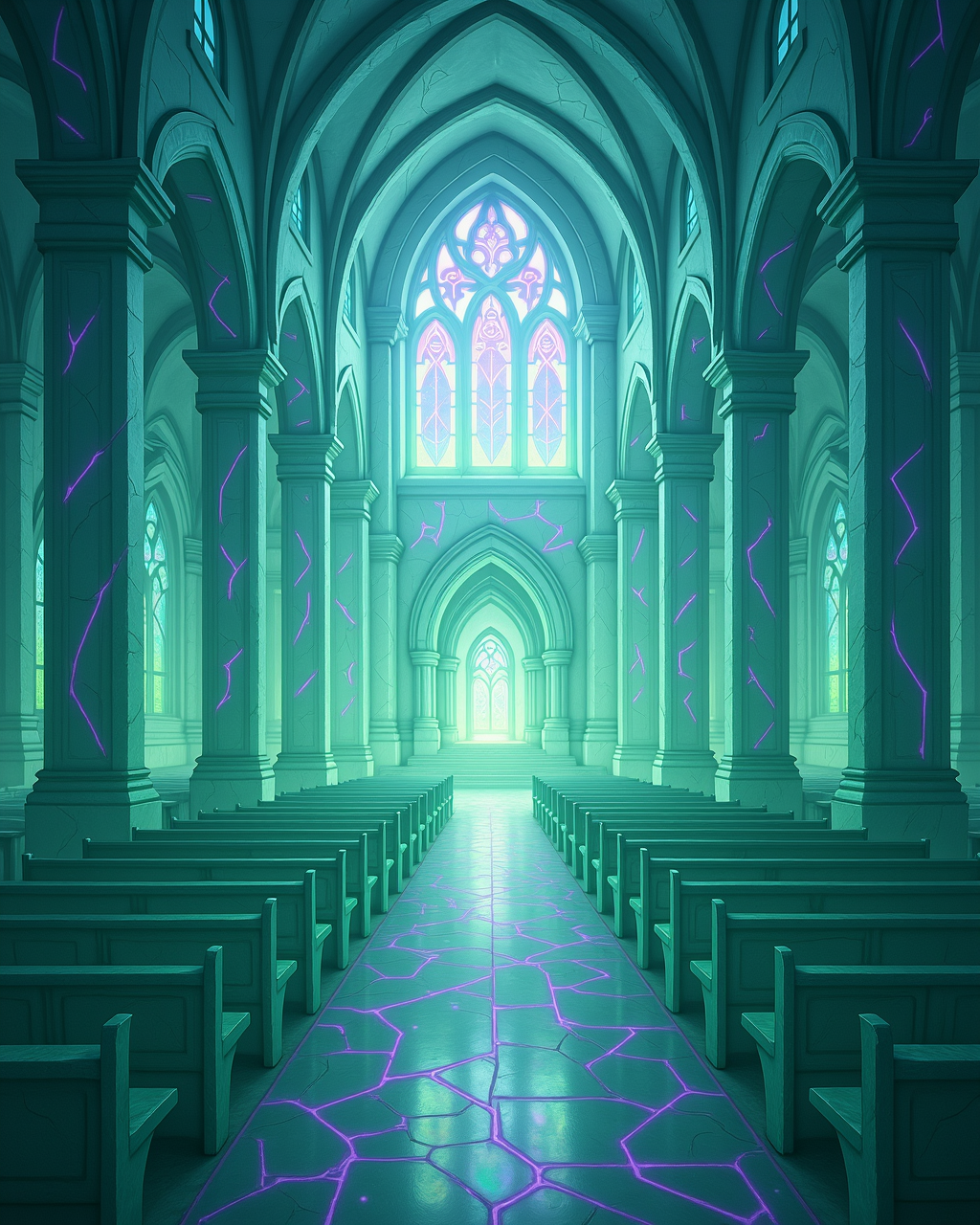
Cathedrals become something between a temple and a geode. Columns crack to reveal veins of green light. Stained glass becomes irrelevant — the walls themselves are luminous.
### Nature
Forests become enchanted in the oldest sense of the word — dangerous, alive, watching. Animals emerge as mineral guardians, their organic forms preserved but their substance entirely replaced.
### Portraits
At lower strengths (0.3-0.5), Glassborne adds subtle crystalline textures to skin and hair — an ethereal quality, like the subject has spent too long in the green corridors. At higher strengths, the transformation is complete: the figure becomes a living statue of cracked glass and luminous veins.
### The Mundane
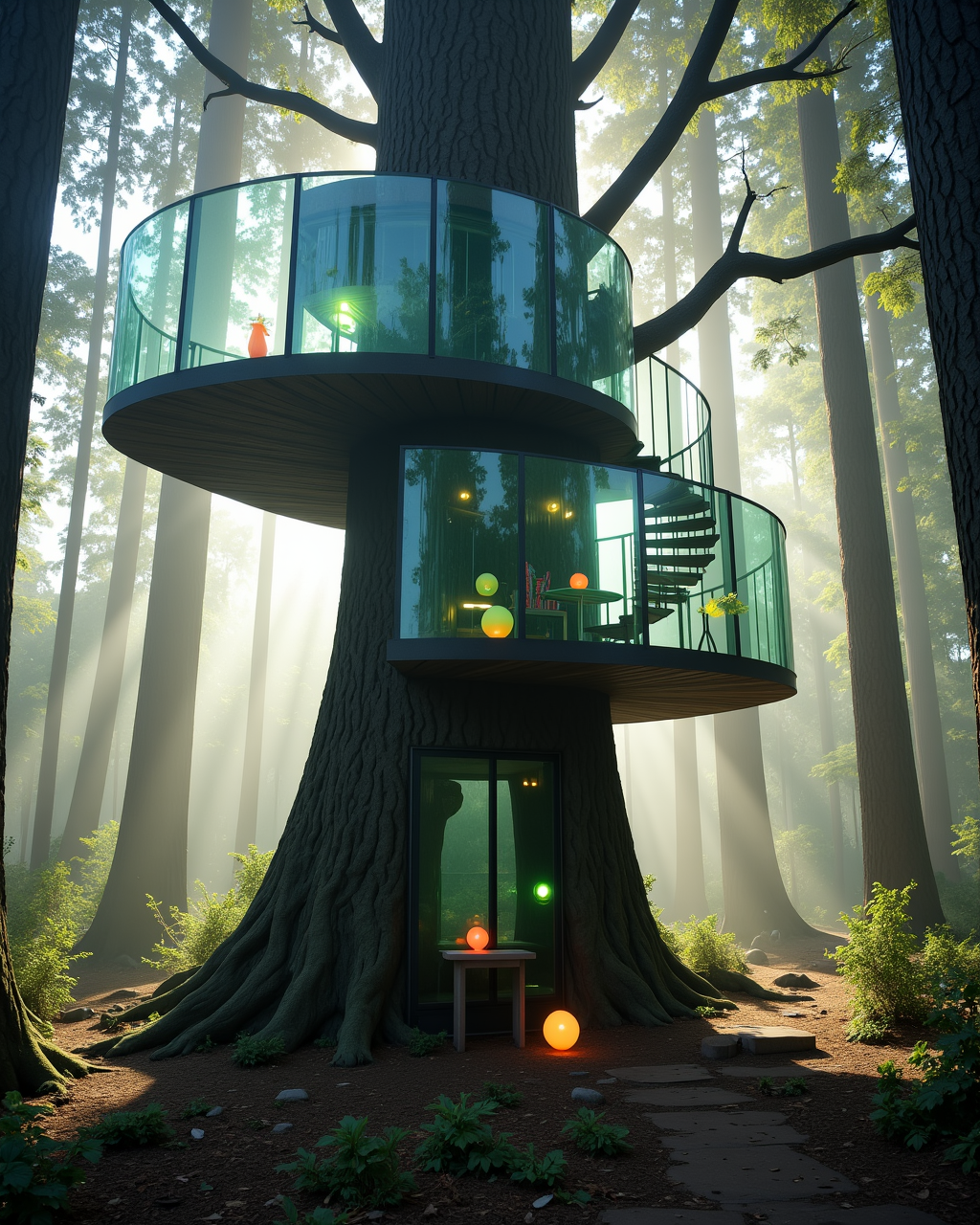
This is where world-morphs truly earn their name. A piano becomes a relic. A treehouse becomes an alien structure grown from crystallized sap. An underwater temple becomes a bioluminescent formation that makes you question whether it was built or grown.
## How to Use It
Recommended parameters:
- Flux guidance: 3.0–4.0 (range: 2.0–8.0)
- LoRA strength: 0.2–0.9 depending on desired intensity
The strength slider is your corruption dial:
- 0.2–0.4: Subtle shimmer — crystalline highlights, faint fissures, a dream-like quality
- 0.5–0.7: Visible transformation — surfaces crack, light bleeds through, the world is clearly other
- 0.8–0.9: Full corruption — every surface is crystal, every shadow hides light, the subject has been entirely consumed
Prompt-wise, Glassborne responds beautifully to atmospheric descriptions: “dark forest”, “ancient cathedral”, “underwater ruins”, “abandoned city at dusk”. The LoRA adds its own palette — you don’t need to prompt for green and purple. It knows what it wants to be.
## The Philosophy of World Morphs
World-morph LoRAs occupy a special position in the catalog. Character LoRAs add a person. Concept LoRAs add a prop or pose. Style LoRAs change the rendering. But world morphs change the fabric of reality within the image. They’re less like a filter and more like a dimensional portal — same composition, different physics.
Glassborne’s particular flavor is geological-arcane: what if crystal was the fundamental building material of everything? What if fissures in reality leaked light from another dimension? What if decay was beautiful and irreversible?
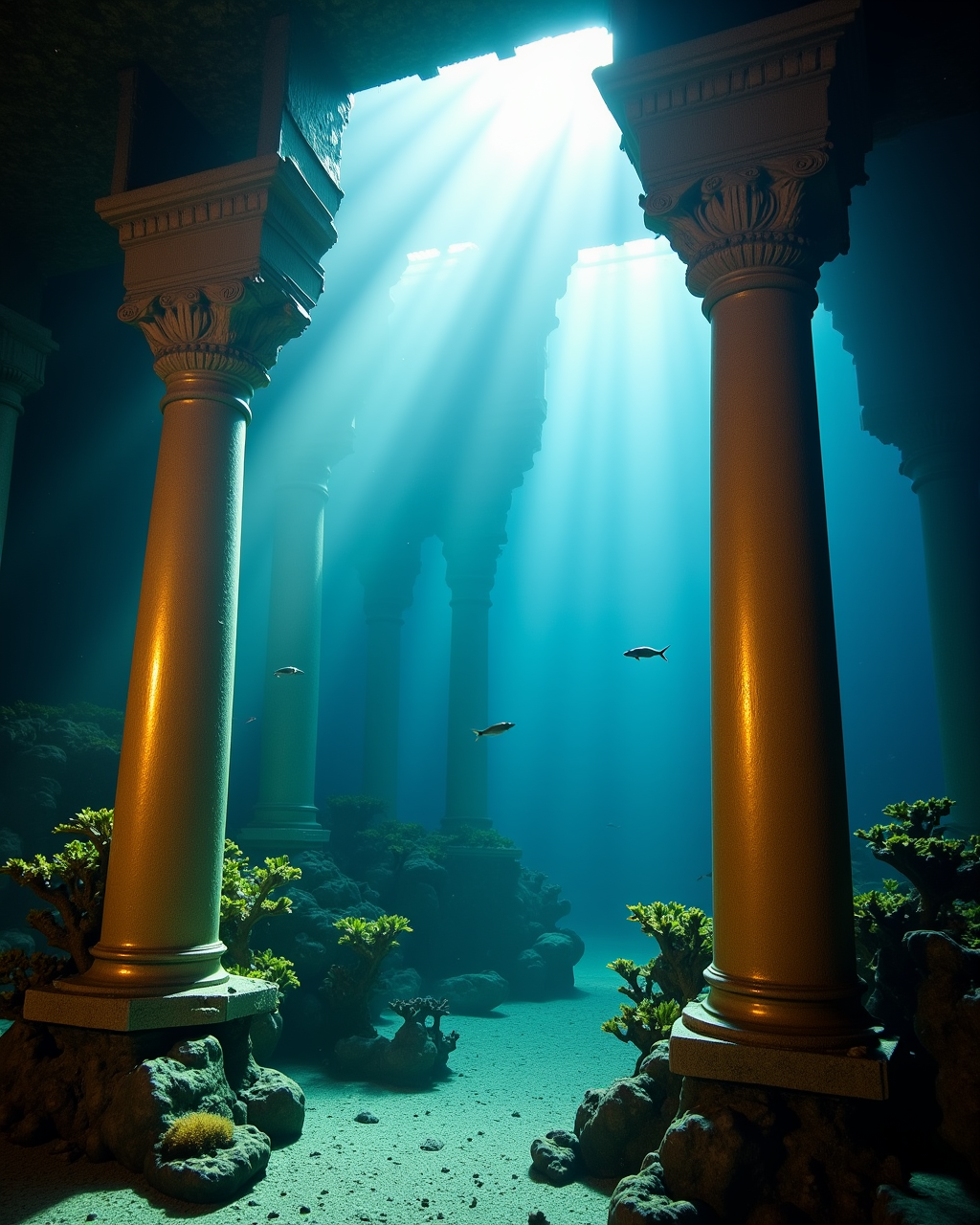
The people of Xuthal would have recognized this aesthetic instantly. Their city was green volcanic glass, smooth and shining, lit by radium gems that glowed at a touch. Glassborne is what would have happened if the city’s corruption had spread beyond its walls — if the green light had gotten into the stone, the soil, the sky.
## Get It
Glassborne is free on Civitai: Glassborne World Morph
All five versions — Flux, SD 3.5 Large, Illustrious, Pony, SDXL — available for download.
Or browse the model page on thalis.dev for parameter recommendations and sample prompts.
Every surface is secretly crystal. Every shadow hides a fissure of light. The corruption is already here — it just needed someone to render it visible.