Crystal Plague (World Morph/Style) [Chroma, Flux, Illu, Klein9B, Qwen, Z-Image]
![Crystal Plague (World Morph/Style) [Chroma, Flux, Illu, Klein9B, Qwen, Z-Image]](/models/crystal-plague/cover.png)
## The Crystal Plague
A materials science corporation called Orion developed a breakthrough recycling process: a chemical catalyst that could dissolve scrap electronics and grow pure metal crystals from the waste. In the lab, it was elegant. A seed crystal dropped into a vat of dissolved circuit boards would selectively extract copper, tin, gold — slotting each atom into a flexible crystalline lattice while leaving plastic and organic matter untouched.
The catastrophe occurred during scale-up. The reactor ruptured. The crystalline agent breached containment and began feeding on the facility itself — steel beams, pipes, equipment blooming into glittering crystal formations. Workers watched the floor turn to glass beneath their feet. Within hours, fragments had entered the municipal water supply.
The Crystal Plague was born.
### How It Spreads
The plague is not alive. It is a self-propagating chemical reaction — an autocatalytic process that converts metal into crystal and uses the product to seed further growth. It spreads like frost on a window, but in three dimensions, consuming substance as it goes.
- Seeding: A microscopic crystal fragment contacts metal. Like a sugar crystal dropped into supersaturated syrup, it triggers conversion.
- Chemical Conversion: The seed oxidizes the base metal and incorporates freed ions into its growing lattice. The crystal eats the object and uses its atoms to enlarge itself.
- Propagation: As the colony grows, pieces break off. Each shard becomes a new seed. Smashing crystals scatters them like spores. Burning them launches molten droplets. Every attempt at destruction is an act of reproduction.
The plague cannot be killed because it was never alive.
### What It Consumes — And What It Doesn’t
The Crystal Plague devours virtually any metal: iron, copper, aluminum, tin, zinc, chromium, gold. It slots these atoms into a high-entropy crystalline matrix — a structure so flexible it accommodates five or more elements simultaneously, the way natural amethyst incorporates iron impurities to produce its violet hue.
What it leaves behind tells the real story:
- Plastic survives. The process was engineered to ignore organic polymers. After the plague passes through a city, mountains of plastic debris remain — wiring insulation, electronics casings, shopping bags — untouched amid crystal rubble. The garbage we wished would disappear is the only thing that endures.
- Glass and quartz resist. Silicon-oxygen bonds are too strong and too different from the metallic bonds the plague exploits. Windows remain intact in crystallized frames. Ceramic tiles survive on collapsed floors.
- Wood, flesh, and organic matter are ignored. The plague has no enzymes, no biology. A tree standing beside a crystallized bridge remains green and living.
The visual result is surreal: collapsed steel skylines encased in faceted crystal growth, with plastic trash and surviving glass scattered through the wreckage like artifacts of a forgotten species.
### The Colors of Infection
The crystals take on the chemistry of what they consume:
| Source Material | Crystal Color |
|---|---|
| Copper wiring | Blue-green, turquoise |
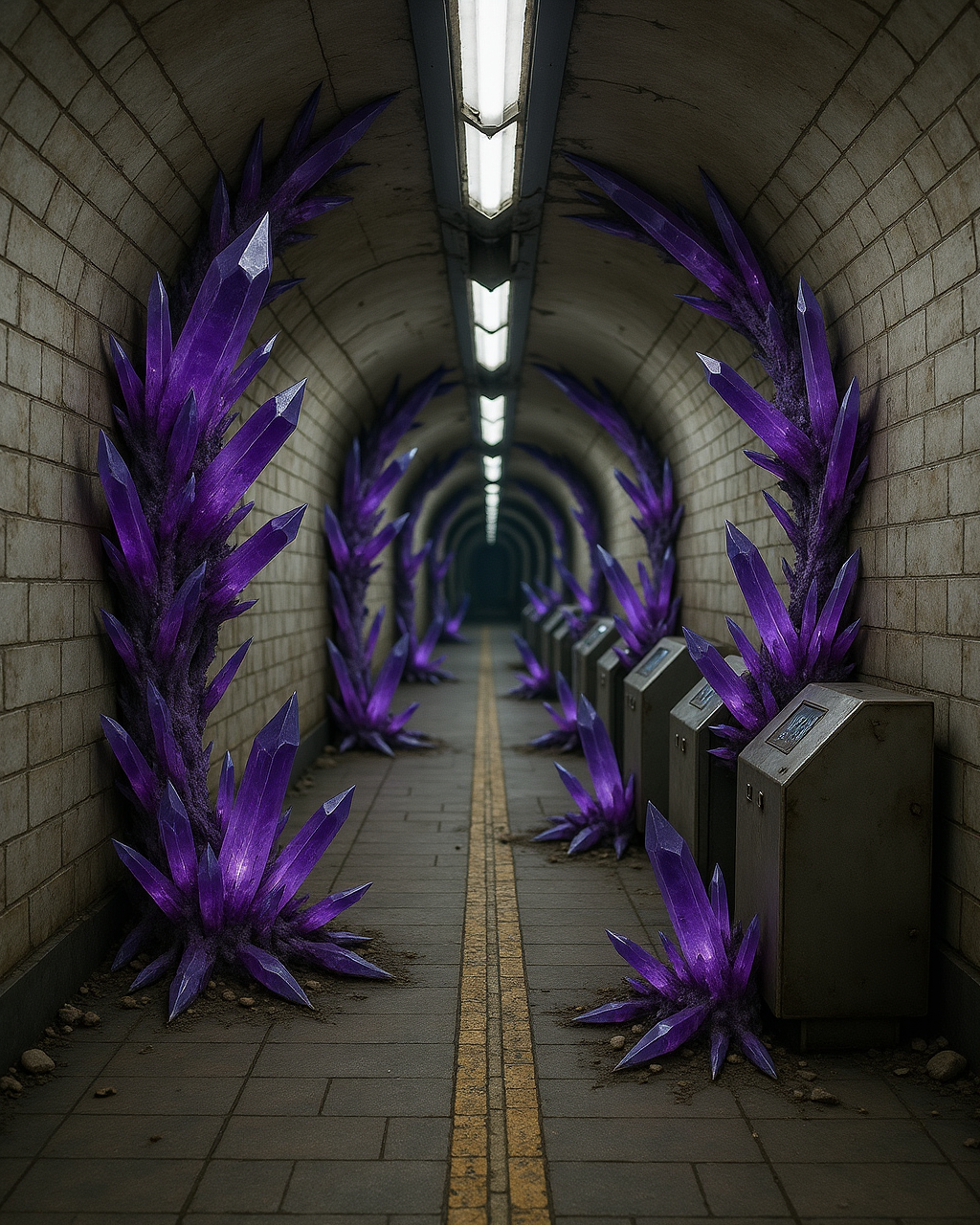
| Iron/steel | Dark purple, black |
| Aluminum | Pale silver, translucent |
| Sodium (chemical stores) | Explosive on contact with water |
| Uranium (nuclear facilities) | Radioactive, glowing |
Each outbreak zone looks different depending on what the plague found to eat.
## The LoRA
Crystal Plague is a world-morphing style LoRA that transforms any scene into a crystalline wasteland. Metal objects sprout faceted growths. Structures collapse under the weight of mineral blooms. The mundane becomes alien.
Available for Flux, Illustrious, and Qwen base models.
### Recommended Settings
| Parameter | Value |
|---|---|
| LoRA Strength | 0.7 – 0.9 |
| Guidance (Flux) | 3.5 – 4.0 |
| Steps | 30 – 40 |
| Sampler | Euler |
### Tips
- Environmental scenes work best: streets, buildings, vehicles, industrial sites
- Lower weights (0.5–0.7) for subtle crystal accents on otherwise normal scenes
- Higher weights (0.8–1.0) for full crystalline apocalypse
- Human subjects at 0.85+ become crystal creatures — faces and heads near metal are most affected
- Pairs well with dramatic lighting: overcast skies, emergency floodlights, dawn through crystal spires
- Combine with other LoRAs at reduced weight for unique effects
### Example Prompts
Residential Street
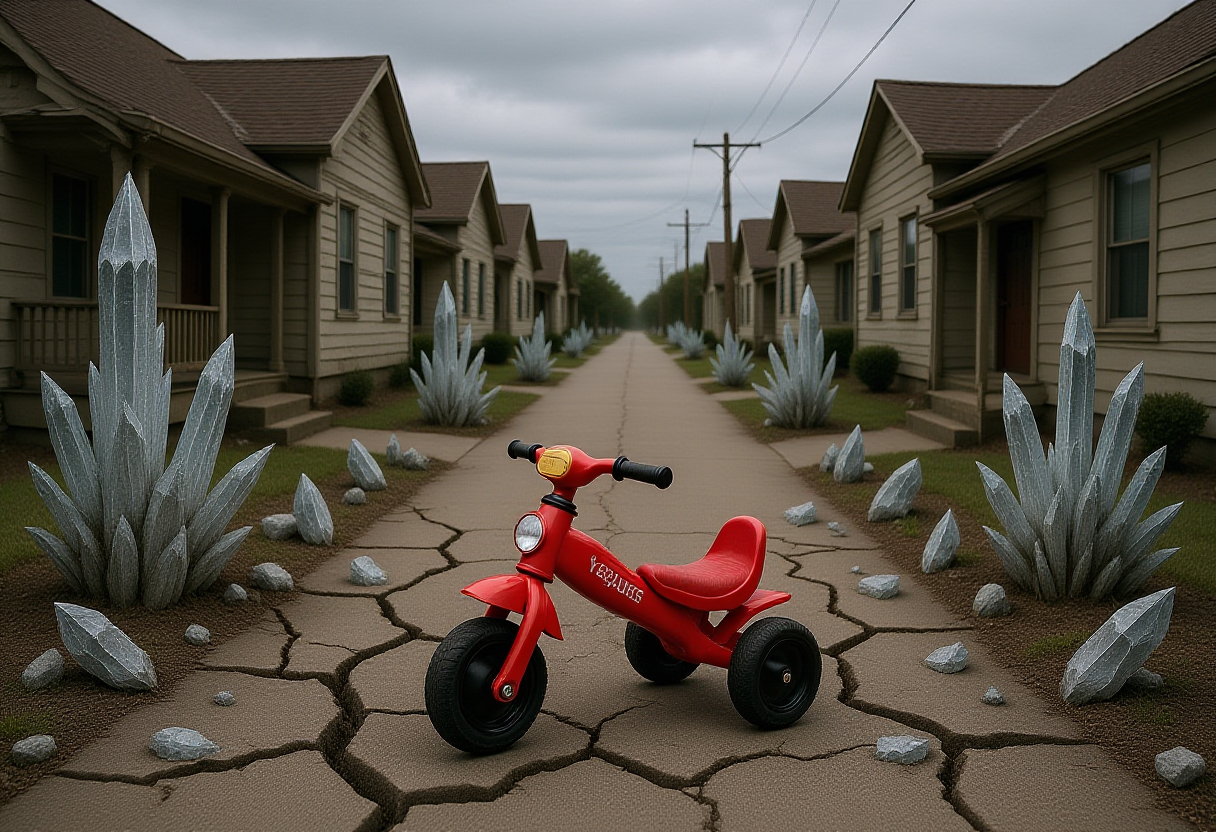
A quiet suburban street overtaken by crystal plague, jagged crystalline spires erupting from chain-link fences and mailboxes, a child’s red tricycle sitting untouched on cracked asphalt while crystal blooms rise from every metal surface around it, overcast sky, eerie silence
Quarantine Zone
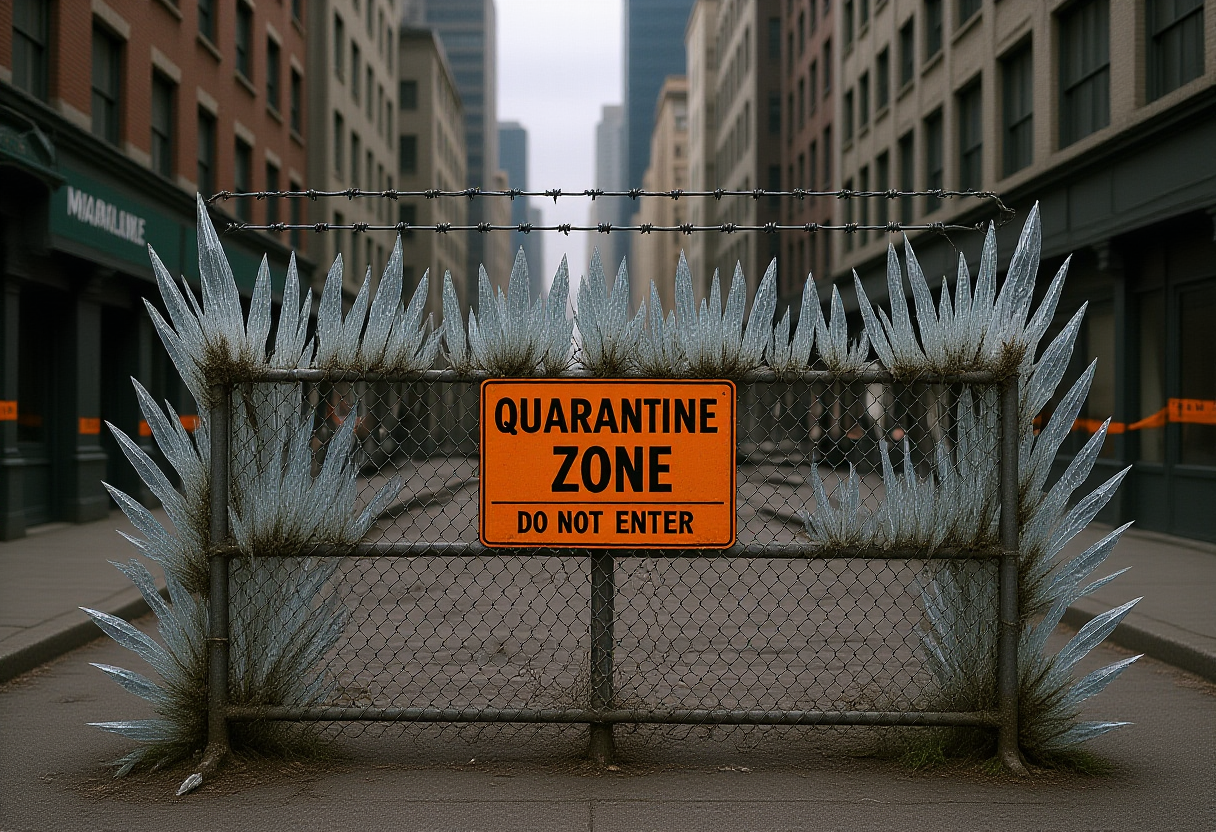
Military quarantine perimeter at the edge of a crystal plague outbreak zone, chain-link fence sprouting crystalline growths from its metal posts, orange warning signs reading QUARANTINE ZONE DO NOT ENTER, abandoned city visible through the crystal haze beyond
Laboratory First Contact
A hazmat scientist kneeling beside a steel pipe covered in luminous blue crystal growths, fluorescent lab lighting, the crystal bloom glowing from within, spreading upward along the pipe toward the ceiling, the scientist’s face visible through their visor showing equal parts fascination and dread
Highway Convoy
An abandoned military convoy on a crystal-plagued highway, tanks and trucks frozen mid-evacuation as crystal spires burst through engine blocks and chassis, headlights still glowing faintly within translucent crystal prisons, storm clouds above
## Gallery




## Download
### Flux v1
### Illustrious v1
### Qwen
### Chroma
### Illustrious v2
### Klein9B
### Zimage
## The World
The Crystal Plague universe is an ongoing worldbuilding project with full lore, timelines, character profiles, and scientific documentation. The setting is grounded in real materials science — crystal growth mechanisms, high-entropy alloys, autocatalytic reactions — extrapolated to apocalyptic scale.
### Ashford, North Carolina
Ground zero. Population 6,000. A post-industrial mill town in the foothills of western North Carolina, bisected by a river and surrounded by forest. When the Orion Materials pilot reactor ruptured, the plague entered the municipal water supply on Day 0. By Day 14, the entire town was a quarantine zone. The crystal bloom consumed the water tower, both bridges, the high school football field, and every car in every driveway.
The wooden houses still stand. The vinyl siding is untouched. The crystal ate only the nails.
### Key Characters
- Dr. Clara Vass — Lead chemist at Orion Materials. Architect of the mixed-metal lattice project. Drafted an internal memo warning of “autocatalytic feedback” before the breach. Never released. Presumed dead.
- Martin Hsu — Lab technician. First to observe that plastics survived inside the test vats. Kept private notebooks that later helped investigators reconstruct events. Did not survive.
- Ranger Danny Whitlow — First responder outside the facility. Documented crystallized deer carcasses along the Ashford River before anyone understood what was happening.
### The Timeline
| Day | Event |
|---|---|
| Day -5 | Pilot reactor brought online. Growth rates exceed projections. |
| Day -2 | Technician Hsu notes fragments remain active when dried. |
| Day 0 | Incident A-17. Reactor ruptures. Crystal bloom engulfs facility. Cooling water breached. |
| Day 1 | Orion issues statement: “no community risk.” Park rangers find crystallized deer. |
| Day 3 | Crystal growth appears in residential plumbing. First evacuations. |
| Day 7 | Highway bridges collapse. National Guard establishes perimeter. |
| Day 14 | Ashford declared total quarantine zone. |
Full lore documents — corporate emails, CDC dossiers, investor pitches, academic papers — are being prepared for publication.
The Crystal Plague is the first franchise from Thalis AI — a LoRA model paired with a living world. More art, more lore, more models to come.